

Vizslas are among the most allergy-prone dog breeds. Their genetic makeup puts them at higher risk than most, and owners often notice symptoms as early as six months old. If your Vizsla is scratching constantly, developing recurring ear infections, or reacting to certain foods, the breed’s biology is likely behind it. Here’s what causes it and what actually works.
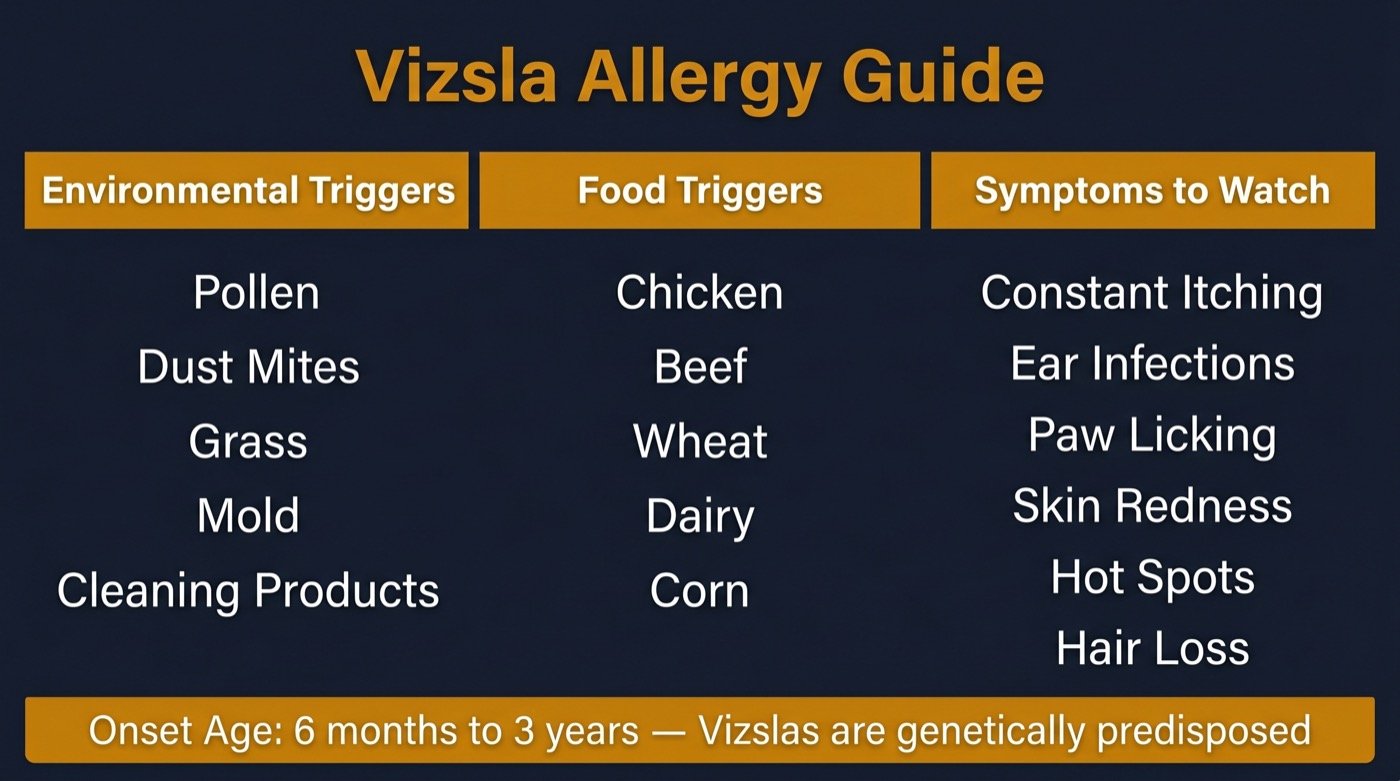
Yes. Vizslas are genetically predisposed to allergies more than most breeds. The most common triggers are environmental (pollen, dust mites, grass) and food-based (chicken, beef, wheat). Symptoms typically appear between 6 months and 3 years and show up as itching, ear infections, and skin inflammation. No, Vizslas are not hypoallergenic.
Vizsla allergies are primarily caused by environmental allergens like dust mites and pollen, as well as food proteins including chicken and beef. Most allergic reactions manifest as persistent skin itching, ear infections, and inflammation, typically developing between 6 months and 3 years of age.
Understanding your Vizsla’s allergy risks and treatment options can dramatically improve their quality of life. According to veterinary research, proper allergy management leads to successful long-term control in most cases.
Are Vizslas Hypoallergenic?
No. Vizslas are not hypoallergenic. While their short, single-layer coat sheds less than double-coated breeds, they still produce the Fel d 1 equivalent protein (Can f 1) in their saliva, skin, and urine that triggers reactions in allergy-sensitive people.
The low-shedding coat does mean less loose hair around the home, but it does not reduce dander or the proteins that cause human allergies. If you or a family member have dog allergies, a Vizsla will still likely cause reactions.
That said, some allergy sufferers report fewer symptoms with Vizslas than with heavy-shedding breeds. This varies by individual sensitivity. The only way to know is to spend time with the specific dog before committing.
Why Vizslas Are More Prone to Allergies
Vizslas carry genetic factors that make them statistically more susceptible to allergic reactions than many other breeds. Their single-layer, short coat offers less protection against environmental irritants while making skin changes more visible to owners.
The breed’s active lifestyle also increases exposure to potential allergens. Vizslas spend considerable time outdoors, encountering pollen, grass, and other environmental triggers that can cause allergic responses.
Additionally, the breed’s sensitive digestive system makes them more reactive to certain food proteins and additives commonly found in commercial dog foods.
Common Types of Allergies in Vizslas
Environmental Allergies (Atopic Dermatitis)
Environmental allergies represent the most frequent type affecting Vizslas. These reactions occur when your dog’s immune system overreacts to airborne or contact allergens.
Primary environmental triggers include:
- Dust mites and household dust
- Tree, grass, and weed pollens
- Mold spores and fungi
- Cleaning products and fabric softeners
- Flea saliva and other insect proteins
Food Allergies and Sensitivities
Food allergies in Vizslas typically develop as reactions to specific proteins rather than grains, contrary to popular belief. The most common culprits include chicken, beef, fish, and dairy products.
Food additive sensitivities can also trigger reactions. Artificial colors, preservatives, and flavor enhancers may cause digestive upset and skin irritation in sensitive Vizslas.
Recognizing Allergy Symptoms in Your Vizsla
Early symptom recognition helps prevent complications and improves treatment outcomes. Vizsla allergy symptoms often start subtly and worsen over time without proper intervention.
Skin-Related Symptoms
Watch for these visible signs on your Vizsla’s skin:
- Persistent scratching focused on face, ears, paws, groin, or armpits
- Red, inflamed skin patches or hives
- Flaky, dry skin or excessive oiliness
- Hair loss and hot spots from excessive licking
- Dark discoloration between toes or in skin folds
Secondary Symptoms
Chronic ear infections often accompany Vizsla allergies, presenting as head shaking, ear odor, or dark discharge. Since ear health is closely connected to overall wellness, maintaining proper dental care for your Vizsla becomes even more important when managing allergies. Digestive symptoms like vomiting or diarrhea may indicate food-related allergies.
Behavioral changes including restlessness, decreased appetite, or reluctance to exercise can signal discomfort from allergic reactions. Some dogs may also develop excessive barking or vocalization patterns when experiencing allergy-related discomfort.
Professional Diagnosis Methods
Accurate allergy diagnosis requires veterinary expertise and proper testing protocols. Self-diagnosis often leads to ineffective treatments and prolonged suffering for your Vizsla.
| Diagnostic Method | Accuracy | Cost Range | Best For |
|---|---|---|---|
| Intradermal Skin Testing | 85-90% | $300-500 | Environmental allergies |
| Blood IgE Testing | 70-80% | $200-400 | Initial screening |
| Elimination Diet Trial | 90-95% | $50-150 | Food allergies |
| At-Home Saliva Tests | 20-40% | $80-200 | Not recommended |
The Gold Standard: Veterinary Testing
Intradermal skin testing remains the most accurate method for identifying environmental allergens. This procedure requires sedation but provides precise results for developing targeted treatment plans.
Blood tests offer a less invasive alternative with good accuracy for initial screening. These tests measure IgE antibodies specific to various allergens in your Vizsla’s system.
Veterinary dermatologists strongly advise against commercial at-home test kits, which lack scientific validation and often produce misleading results.
How to Treat Vizsla Allergies Effectively
Immediate Symptom Management
Begin treatment by addressing your Vizsla’s immediate discomfort while working toward long-term solutions:
- Consult your veterinarian for prescription antihistamines or targeted medications
- Implement regular bathing with hypoallergenic shampoos to remove allergens
- Maintain strict flea control using veterinary-recommended preventatives
- Apply topical treatments to strengthen your dog’s skin barrier
Long-Term Treatment Strategies
Successful allergy management requires a multi-faceted approach tailored to your Vizsla’s specific triggers and symptoms.
Allergen-specific immunotherapy offers the most promising long-term solution, with success rates between 60-80%. This treatment involves custom-formulated injections or oral medications that gradually desensitize your dog’s immune system.
Environmental control measures include washing bedding in hot water weekly, using HEPA air filters, and choosing pet-safe cleaning products. These steps significantly reduce allergen exposure in your home. Consider using a hypoallergenic dog bed designed to minimize dust mites and other environmental allergens that can trigger reactions.
Orthopedic Dog Bed for Vizslas
Vizslas are active dogs that need quality rest between high-energy days. An orthopedic bed supports their joints and gives them a warm, dedicated space that helps them stop burrowing into yours.
Dietary Management
Work with your veterinarian to identify problematic food ingredients through systematic elimination diets. Novel protein sources like duck, venison, or fish may provide alternatives for dogs allergic to common proteins.
Avoid unnecessary grain-free“>grain-free diets unless specifically recommended, as recent research links these formulations to heart disease in dogs without grain allergies.
Preventing Allergy Complications
Untreated allergies can lead to secondary bacterial infections, chronic ear problems, and behavioral issues. Regular monitoring and prompt treatment prevent these complications from developing.
Omega-3 fatty acid supplements support skin health and may reduce inflammatory responses. Quality supplements designed for dogs provide optimal dosing and absorption rates.
Regular grooming with a high-quality brush helps remove allergens from your Vizsla’s coat and allows you to monitor their skin condition more effectively. Maintain detailed records of symptoms, triggers, and treatment responses to help your veterinarian adjust management strategies as needed.
Grooming Brush for Vizsla Coats
Vizslas shed more than most people expect. Regular brushing with the right tool keeps loose hair manageable, reduces allergens in the home, and keeps their short coat looking sharp.
Conclusion
Vizsla allergies present manageable challenges with proper veterinary guidance and consistent care routines. Early recognition of symptoms, accurate professional diagnosis, and comprehensive treatment plans lead to successful outcomes for most affected dogs.
Remember that allergy management requires patience and persistence. Work closely with your veterinarian to develop an individualized approach that addresses your Vizsla’s specific needs and improves their overall quality of life.
With appropriate treatment, allergic Vizslas can enjoy active, comfortable lives alongside their families for many years to come.
Frequently Asked Questions
Are Vizslas hypoallergenic dogs?
No, Vizslas are not hypoallergenic dogs. While they have short, single-layer coats that shed less than double-coated breeds, they still produce allergens through dander, saliva, and urine that can trigger reactions in sensitive people.
What age do Vizslas typically develop allergies?
Most Vizslas develop allergy symptoms between 6 months and 3 years of age. Environmental allergies often appear first, while food allergies can develop at any age but commonly manifest during the first few years of life.
Can grain-free diets help Vizslas with allergies?
Grain-free diets should only be used if your Vizsla has a documented grain allergy, which is relatively rare. Most food allergies in dogs are caused by proteins like chicken or beef rather than grains. Unnecessary grain-free diets may increase heart disease risk.
How much does Vizsla allergy treatment cost?
Treatment costs vary widely depending on severity and chosen methods. Basic management including medications and special diets costs $50-200 monthly. Comprehensive treatment with immunotherapy ranges from $500-2000 initially, then $100-300 monthly for maintenance.
Can Vizsla allergies be cured completely?
Allergies cannot be completely cured, but they can be effectively managed to provide relief and prevent complications. Allergen-specific immunotherapy offers the best long-term control, with 60-80% of dogs experiencing significant improvement or resolution of symptoms.
How do I know if my Vizsla has food allergies vs environmental allergies?
Food allergies often cause year-round symptoms including digestive issues, while environmental allergies may be seasonal. Food allergies typically affect ears, feet, and face first. Professional elimination diet trials provide definitive food allergy diagnosis.
Are at-home allergy tests reliable for Vizslas?
Veterinary dermatologists do not recommend at-home allergy test kits for dogs. These tests lack scientific validation and often provide inaccurate results that can lead to inappropriate dietary restrictions or treatments. Professional veterinary testing provides much more reliable results.
Written by Alex B.
Alex is a writer and dog enthusiast who has spent years researching the Vizsla breed. He created VizSlaHow to give dog owners a practical, honest resource about one of the most energetic and rewarding breeds in existence. He is not a veterinarian. For health concerns, always consult a qualified vet.
About the Author
Alex B. is a Vizsla owner and enthusiast who writes about the breed’s unique needs, personality, and care requirements. All advice is based on personal experience and research from veterinary and breed-specific sources.