
Yes. Vizslas are exceptional agility prospects thanks to their athleticism, intelligence, and strong handler bond. Foundation work can begin at 8 weeks with flatwork and recall. Low-impact obstacles are appropriate from 6 to 12 months, and full-height jumps should wait until growth plates close at 15 to 18 months. Positive reinforcement is essential for this sensitive breed.
Vizslas have earned quintuple championships spanning conformation, field, obedience, and agility, more than almost any other breed. That athletic versatility is no accident: these Hungarian gundogs were built for all-day work, and channeling that drive into agility produces some of the most impressive performances in the sport.
Agility is widely considered one of the fastest growing dog sports by the Vizsla Club of America. Yet most online advice treats Vizsla temperament and agility skills as separate topics. Here, we combine them.
Why Vizslas Thrive in Agility
Vizslas are purpose bred hunting partners with stamina, problem solving ability, and an intense desire to please. Those traits map almost perfectly to agility, where speed, focus, and teamwork decide every run.
However, the same sensitivity that makes them brilliant learners also makes them fragile under pressure. Harsh corrections can cause shutdown behavior that takes months to repair. Patient, reward based training is non negotiable for this breed.
The Vizsla Temperament Profile for Sport
- High arousal: They get excited fast and struggle to settle without practice.
- Velcro bond: They want to work close to you, which helps handling but hurts independence.
- Late maturity: Mental focus often does not solidify until 18 to 24 months.
- Prey drive: Birds, squirrels, and rustling leaves are constant ringside distractions.
Vizsla Agility Training Guide by Age Stage
Skipping developmental stages is the leading cause of orthopedic injury and burnout in young sport dogs. Use this timeline as your roadmap.
| Age Range | Training Focus | Allowed Equipment | Session Length |
|---|---|---|---|
| 8 to 16 weeks | Socialization, name game, marker training, balance work | Wobble cushions, flat ladders, tunnels (straight, short) | 3 to 5 minutes |
| 4 to 12 months | Recall, impulse control, body awareness, flatwork | Low jumps at wither height set as bars on ground, curved tunnels, table at low height | 5 to 10 minutes |
| 12 to 18 months | Sequencing, handling systems, weave entry shaping | Jumps at half height, low contact obstacles, 2×2 weave method | 10 to 15 minutes |
| 18 months and older | Full sequences, competition prep, course strategy | Full height jumps, full contacts, 12 weave poles | 15 to 20 minutes |
Building the Foundation Before Obstacles
Purina trainers and breed clubs agree: obedience and body awareness come before equipment. A Vizsla that cannot recall off a squirrel will not recall off a tunnel exit either.
Five Foundation Skills Every Vizsla Needs
- Rocket recall: Reward heavily for coming away from high value distractions.
- Stationary start: A reliable sit or down stay at the start line.
- Hand targeting: Nose to palm guides them through handling lines.
- Tug and food drive: Two reward systems prevent burnout on either one.
- Mat or place behavior: Builds calm between training reps and at trials.
No-Pull Dog Harness
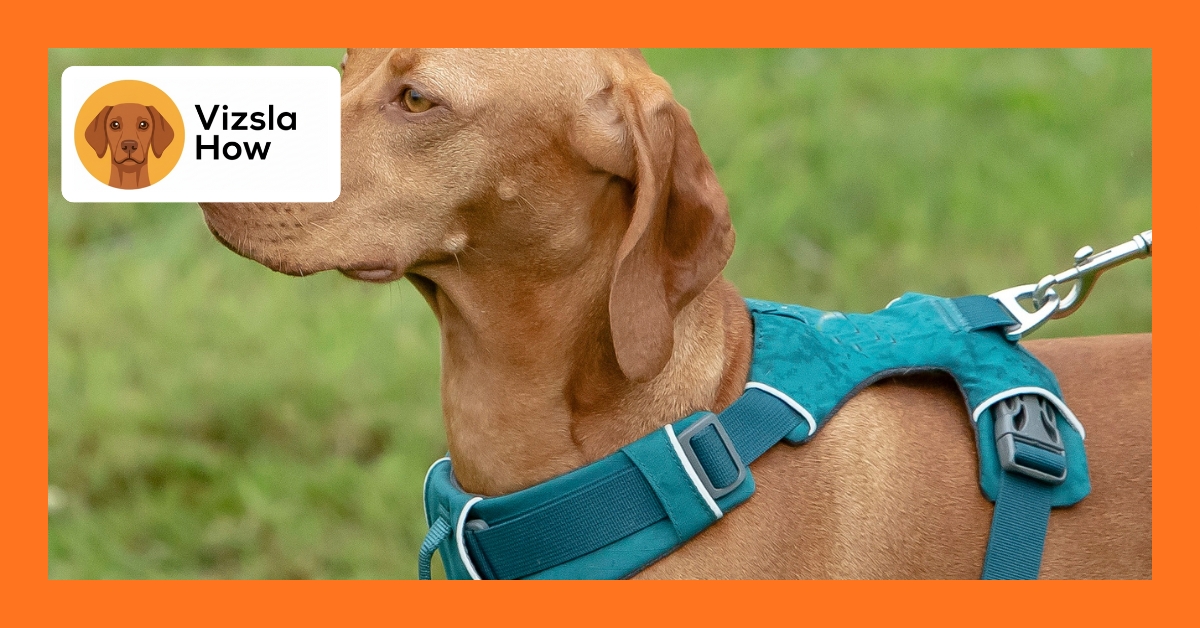
A front-clip harness gives handlers better directional control during recall and foundation leash work, without putting pressure on a Vizsla’s neck during high-energy training.
Managing Arousal: The Vizsla Specific Challenge
The old saying that a tired Vizsla is a good Vizsla is only half right. A depleted Vizsla cannot learn, and an overstimulated one cannot think. Aim for the middle zone.
Give your dog 20 to 30 minutes of sniffing or light jogging before training. This takes the edge off without exhausting muscles you need for jumping work later.
How to Introduce Your Vizsla to Agility Obstacles
Follow this step by step process to introduce each piece of equipment safely and with enthusiasm intact.
- Shape, do not lure: Let your Vizsla offer interaction with the obstacle. Mark and reward curiosity first.
- Keep it low: All jumps stay as ground bars or wing only until 12 months. Contacts stay flat or near flat.
- Reward at the exit: Place treats past the obstacle so your dog drives forward, not back to you.
- One obstacle per session: Master entries and exits before chaining anything together.
- End on success: Stop after two or three great reps, not when your dog is fading.
Tunnels First, Jumps Last
Tunnels are low impact, high reward, and self rewarding through the rush of speed. They are the best confidence builder for sensitive Vizsla puppies. Save real jumping until veterinary clearance confirms growth plate closure.
Injury Prevention and Conditioning
Vizslas are lean and fast, which means impact forces hit joints hard. Conditioning protects your athlete for a long career.
- Warm up with 5 minutes of brisk walking, spins, and cavaletti before sessions.
- Cool down with a leashed walk and gentle stretching.
- Cross train with swimming, hill work, and balance discs twice weekly.
- Surface matters: Train on rubber, turf, or grass, never concrete or slick floors.
- Annual vet checks should include hip, elbow, and soft tissue evaluations.
Orthopedic Dog Bed
Proper recovery between training sessions matters for an active breed. An orthopedic foam bed reduces joint pressure after high-impact agility work and long trial days.
Finding the Right Class and Coach
Experienced agility coaches agree on one thing: nothing replaces in person feedback. Self taught handlers often build habits that limit speed and increase injury risk later.
Look for instructors who use positive reinforcement exclusively, who limit class size to six or fewer dogs, and who have experience with sensitive breeds. Ask if they teach a specific handling system like Linda Mecklenburg, OneMind Dogs, or Greg Derrett, then commit to one.
Preventing Burnout in a Sensitive Breed
Ambitious owners can accidentally turn agility into a chore. Watch for early signs: slow start lines, sniffing on course, or your Vizsla running to the ring exit.
Build in recovery weeks every 6 to 8 weeks with no formal training. Replace it with hikes, swims, or scent games. A mentally fresh Vizsla outperforms an over drilled one every single trial.
Key Takeaways
- Vizslas are exceptional agility prospects when training respects their sensitivity and late maturity.
- Build obedience, recall, and body awareness before introducing any obstacle.
- Delay full height jumps and contacts until 15 to 18 months minimum, confirmed by your vet.
- Use this Vizsla agility training guide as a multi year roadmap, not a 12 week program. Patience produces podium dogs.
Frequently Asked Questions
Are Vizslas good at dog agility?
Yes, Vizslas are excellent agility dogs. Their athleticism, intelligence, and strong handler bond make them naturally suited to the sport. Many Vizslas hold national agility titles. Success depends on patient, positive training that respects their sensitivity and channels their high energy into focused work rather than over arousal on course.
When can my Vizsla start agility training?
Foundation work can begin as early as 8 weeks with flatwork, recall, and body awareness games. Low impact obstacle introduction such as flat tunnels and ground bars is appropriate from 6 months. Full height jumps and contact obstacles should wait until growth plates close, typically 15 to 18 months, confirmed by your veterinarian.
How long should Vizsla training sessions be?
Keep sessions short to match their attention span and avoid mental fatigue. Puppies do best with 3 to 5 minute bursts, adolescents with 10 minutes, and adult Vizslas with 15 to 20 minute focused sessions. End every session before your dog loses enthusiasm. Multiple short sessions daily beat one long session.
What is the hardest part of training a Vizsla for agility?
Managing arousal and distraction are the biggest challenges. Vizslas get excited quickly and their prey drive pulls focus toward wildlife, smells, or other dogs. Building impulse control through mat work, start line stays, and reward based recall is essential before sequencing obstacles. Sensitivity to pressure means corrections backfire fast.
Do I need professional classes or can I train at home?
You can build foundations at home, but in person classes are strongly recommended for actual obstacle work. Professional instructors catch handling errors, ensure safe equipment progression, and provide the controlled distraction environment Vizslas need. Look for positive reinforcement only trainers with experience in sensitive sporting breeds and small class sizes.
How do I keep my Vizsla focused around distractions at trials?
Practice in progressively harder environments before competing. Start in your yard, then quiet parks, then busy training fields. Use high value rewards reserved only for distraction work. Build a strong start line routine so your Vizsla enters the ring in a calm, focused state rather than already over aroused from the crating area.
Can agility help with Vizsla separation anxiety?
Indirectly yes. Agility teaches independence because your Vizsla must run obstacles away from you. The mental and physical fatigue also reduces general anxiety. However, agility alone will not cure separation anxiety. Learn more about addressing Vizsla separation anxiety through dedicated independence training, crate conditioning, and gradual alone time practice for the best results.
About the Author
Alex B. is a Vizsla owner and enthusiast who writes about the breed’s unique needs, personality, and care requirements. All advice is based on personal experience and research from veterinary and breed-specific sources.